
Pest plant control
Gorse Removal and Mulching
The big one. Dense, spiny, seeds for decades, and it takes hold on exactly the slopes a tractor cannot work.
Get an Estimate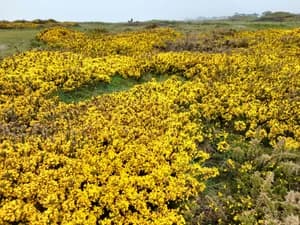
SHE Pre-Qual, Tōtika & IMPAC Certified




How to identify gorse
Ulex europaeus
- Dense spiny shrub, usually 1m to 3m tall, often forming an impenetrable thicket.
- Bright yellow pea-shaped flowers, heaviest in spring but present on and off most of the year. A coconut smell on a warm day is the giveaway.
- Green spines rather than true leaves on mature growth. Seedlings have soft clover-like leaves before the spines harden.
- Thrives on poor, disturbed and steep ground, and on north-facing faces where nothing else has been managed.
Why it is a problem on your land
Gorse takes usable land out of production faster than almost anything else in New Zealand. It shades out pasture, blocks stock access, hides fence lines so they cannot be maintained, and carries a genuine fire risk once the dead material builds up underneath. It is also a declared pest plant in most regions, which means a neighbour or a regional council can eventually make it your problem in writing rather than just your problem in practice.
Why spraying alone does not solve it
Spraying kills the plant but leaves it standing. You get a paddock of dead, dry, still-spiny gorse that is harder to walk through than it was alive, more flammable than it was alive, and still blocking every metre of ground underneath it. On a steep face it can stand there for years. The seed bank in the soil is untouched either way, so the regrowth conversation is the same. Spraying has its place, and plenty of people use it well, but it does not give you your land back on the day.
GRazer do not spray. Herbicide is a legitimate tool and there are situations where it is the right call, but it is not a service we offer. What we do is remove the plant mechanically.
How we clear gorse
We mulch gorse in place with remote-controlled machines, cutting it to ground level and processing the whole plant into a fine mulch layer that stays on the site. Mature gorse stems at 200mm to 300mm are within our machines' capacity, which is two to three times what most slope mulching in this country is set up to handle. Because the machines are remote-controlled we can work faces up to 55 degrees with nobody sitting on the slope, which is the part that matters on gorse: it grows where it is genuinely dangerous to put an operator.
What the site looks like afterwards
You get access back the same day. The mulch layer sits on the surface, suppresses light, and slows the seedlings that come up from the existing seed bank. Expect some regrowth, because gorse seed stays viable in the soil for decades and no method available changes that. The difference is that regrowth on a mulched site is soft, low, and easy to deal with by grazing or a maintenance pass, instead of being a thicket you cannot get into.
Gorse questions we get asked
Does mulching spread gorse seed?
How steep a face can you clear gorse on?
How thick can the gorse be before it is too big to mulch?
Will I need to do it again?
Guides worth reading
- Gorse control on steep slopes in NZ: what actually worksGorse does its best work on the country you can least safely reach. Here is how to take it back.
- Reclaiming land for grazing after a weed invasionThe paddock that became a gorse block is not lost. It is one clearing job and a sensible grazing plan away from being a paddock again.
Other weeds we clear
Most sites have more than one. If you are looking at a mix, that is normal and it does not change the job much.
- Woolly nightshadeFast, tall, toxic to handle, and a declared pest plant across most of the North Island. Second only to gorse for search interest.
- Wilding pinesA national problem at landscape scale. Catch them small and it is a mulching job; leave them and it becomes a forestry operation.
- BlackberryLow, dense, thorny and endlessly persistent. The classic gully and fence-line invader.
- BambooDense, woody and famously hard to get rid of. This is where material capacity actually decides whether the job is possible.
- Pampas grassHuge clumps, prolific windborne seed, and a serious fire load. Common on banks, roadsides and coastal margins.
- KikuyuNot scrub, but it gets away from people just as badly. Rank kikuyu on a bank defeats most mowers.

Dealing with gorse?
Send us the address and a few photos and we will come back with an estimate. No site visit needed for most jobs.