
Pest plant control
Pampas Grass Removal
Huge clumps, prolific windborne seed, and a serious fire load. Common on banks, roadsides and coastal margins.
Get an Estimate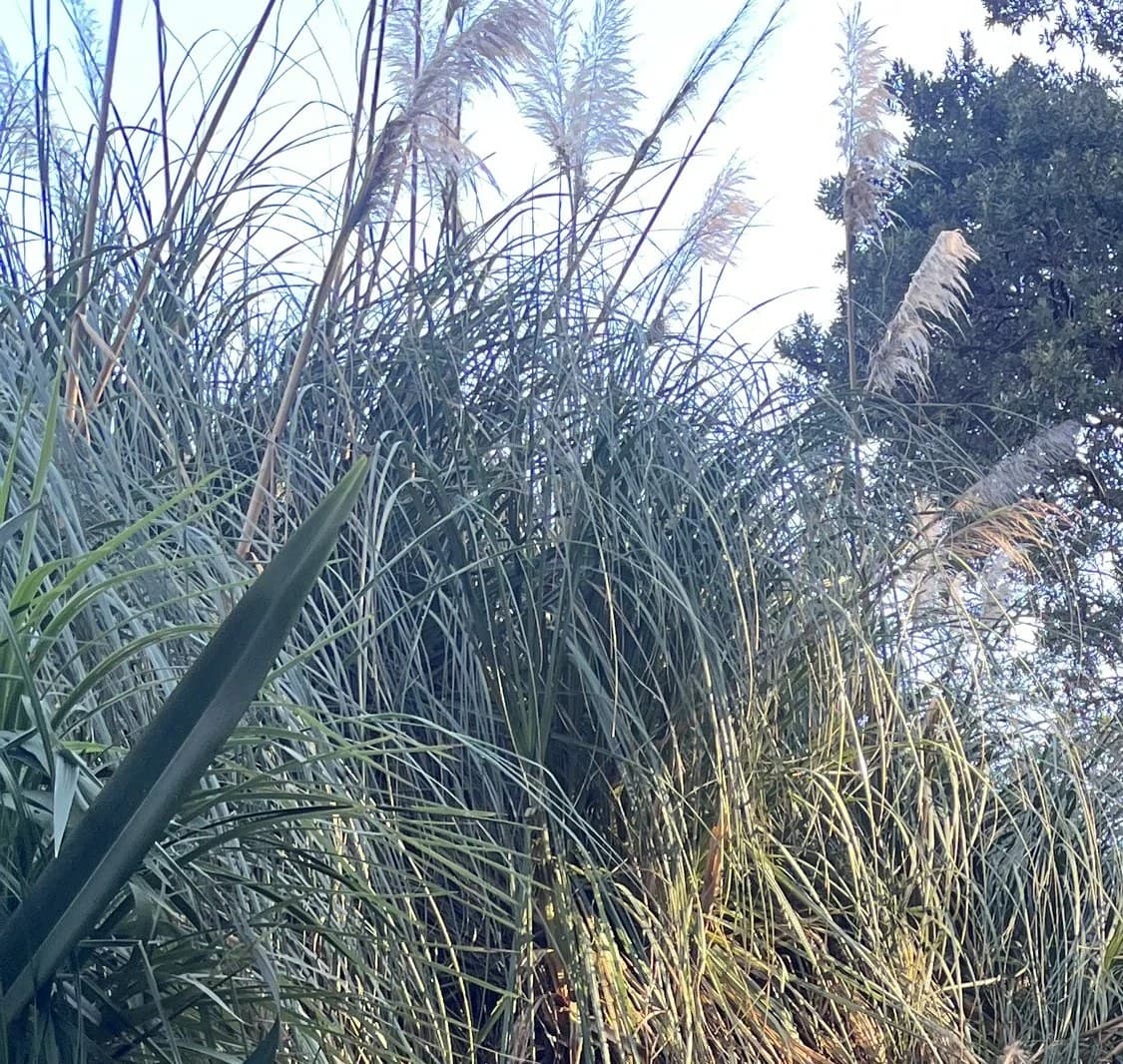
SHE Pre-Qual, Tōtika & IMPAC Certified




How to identify pampas grass
Cortaderia selloana / jubata
- Very large tussock, often over 2m, with tall feathery flower plumes standing above it.
- Dead leaf material builds up in a dry skirt around the base of the clump, which is what makes it such a fire risk.
- Leaf edges are sharp enough to cut, so hand handling is genuinely unpleasant.
- Easily confused with native toetoe, which has drooping golden plumes and does not build the same dead skirt. Worth being sure before clearing.
Why it is a problem on your land
Pampas seeds prolifically and the seed travels a long way on the wind, so one established stand keeps reseeding a whole district. The clumps are large enough to take real area out of production, they harbour pests, and the accumulated dead material at the base is a significant fire hazard next to a road, a fence line or a plantation edge. On coastal and roadside banks it is often the dominant plant simply because nothing else has been able to get in and manage it.
Why spraying alone does not solve it
Killing a pampas clump does not remove it. A dead clump is drier than a live one, which makes the fire problem worse rather than better, and it stays as a large physical obstruction for a long time. On the steep roadside and coastal banks where pampas thrives, safely getting a person close enough to treat every clump is a real limitation.
GRazer do not spray. Herbicide is a legitimate tool and there are situations where it is the right call, but it is not a service we offer. What we do is remove the plant mechanically.
How we clear pampas grass
We mulch the clumps out entirely, including the dead skirt, and leave the ground as a clean mulch layer. Remote operation on faces to 55 degrees means the banks and margins where pampas concentrates are workable. Because the dead material goes through the machine rather than being left in place, the fire load goes with it.
What the site looks like afterwards
The bank or margin is clear and the fire load is gone. Pampas will attempt to reestablish from the ongoing seed rain, particularly if there are untreated stands upwind, so periodic follow-up keeps a cleared site cheap to maintain.
Pampas grass questions we get asked
How do you tell pampas from native toetoe?
Does clearing pampas reduce fire risk?
Other weeds we clear
Most sites have more than one. If you are looking at a mix, that is normal and it does not change the job much.
- GorseThe big one. Dense, spiny, seeds for decades, and it takes hold on exactly the slopes a tractor cannot work.
- Woolly nightshadeFast, tall, toxic to handle, and a declared pest plant across most of the North Island. Second only to gorse for search interest.
- Wilding pinesA national problem at landscape scale. Catch them small and it is a mulching job; leave them and it becomes a forestry operation.
- BlackberryLow, dense, thorny and endlessly persistent. The classic gully and fence-line invader.
- BambooDense, woody and famously hard to get rid of. This is where material capacity actually decides whether the job is possible.
- KikuyuNot scrub, but it gets away from people just as badly. Rank kikuyu on a bank defeats most mowers.
Dealing with pampas grass?
Send us the address and a few photos and we will come back with an estimate. No site visit needed for most jobs.