
Pest plant control
Woolly Nightshade Removal
Fast, tall, toxic to handle, and a declared pest plant across most of the North Island. Second only to gorse for search interest.
Get an Estimate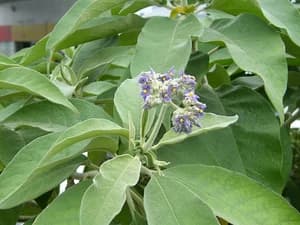
SHE Pre-Qual, Tōtika & IMPAC Certified




How to identify woolly nightshade
Solanum mauritianum
- Small tree or large shrub, commonly 2m to 6m, occasionally taller.
- Large soft grey-green leaves covered in fine hairs, which is where the name comes from. The whole plant looks dusty or felted.
- Purple star-shaped flowers with a yellow centre, followed by clusters of round green berries that ripen to dull yellow.
- Strong unpleasant smell when the leaves are crushed or the plant is cut.
- Favours gullies, bush margins, riparian strips and any ground that has been left alone for a few seasons.
Why it is a problem on your land
Woolly nightshade grows fast and shades out everything under it, which is why it takes over gullies and bush margins so quickly. Birds eat the berries and spread the seed well beyond the original stand, so a small patch becomes a catchment problem. It is toxic, and the fine hairs on the leaves are a genuine irritant to eyes, skin and airways, which makes hand clearing an unpleasant and slow job. It is a declared pest plant in most North Island regions, so there is often a legal obligation attached to it as well.
Why spraying alone does not solve it
Spray a stand of six-metre woolly nightshade and you are left with six-metre dead woolly nightshade. It stays standing, it keeps blocking access to the gully, and the berries that were already on it can still be spread. The material also has to break down in place over a long period. If the goal is to actually get into the gully and see the ground again, killing it standing does not get you there.
GRazer do not spray. Herbicide is a legitimate tool and there are situations where it is the right call, but it is not a service we offer. What we do is remove the plant mechanically.
How we clear woolly nightshade
We mulch it where it stands, whole plant into the mulch layer, including the trunk. The 200mm to 300mm material capacity matters here because established woolly nightshade develops a real woody trunk that smaller slope machines cannot take. The remote-controlled machines work the gully faces and bush margins where it likes to grow and where footing is bad. Nobody is standing in the stand handling toxic, irritating foliage by hand.
What the site looks like afterwards
The gully or margin is open and walkable immediately, and you can see the ground and any regeneration underneath for the first time in years. Seedlings will appear from the existing seed bank and from ongoing bird spread, so this is a species where a maintenance pass is genuinely worth planning for. On restoration sites the cleared ground is usually ready for planting.
Woolly nightshade questions we get asked
Is woolly nightshade poisonous?
Do I have a legal obligation to control it?
Can you clear it out of a gully?
Other weeds we clear
Most sites have more than one. If you are looking at a mix, that is normal and it does not change the job much.
- GorseThe big one. Dense, spiny, seeds for decades, and it takes hold on exactly the slopes a tractor cannot work.
- Wilding pinesA national problem at landscape scale. Catch them small and it is a mulching job; leave them and it becomes a forestry operation.
- BlackberryLow, dense, thorny and endlessly persistent. The classic gully and fence-line invader.
- BambooDense, woody and famously hard to get rid of. This is where material capacity actually decides whether the job is possible.
- Pampas grassHuge clumps, prolific windborne seed, and a serious fire load. Common on banks, roadsides and coastal margins.
- KikuyuNot scrub, but it gets away from people just as badly. Rank kikuyu on a bank defeats most mowers.

Dealing with woolly nightshade?
Send us the address and a few photos and we will come back with an estimate. No site visit needed for most jobs.