
Pest plant control
Blackberry Removal and Mulching
Low, dense, thorny and endlessly persistent. The classic gully and fence-line invader.
Get an Estimate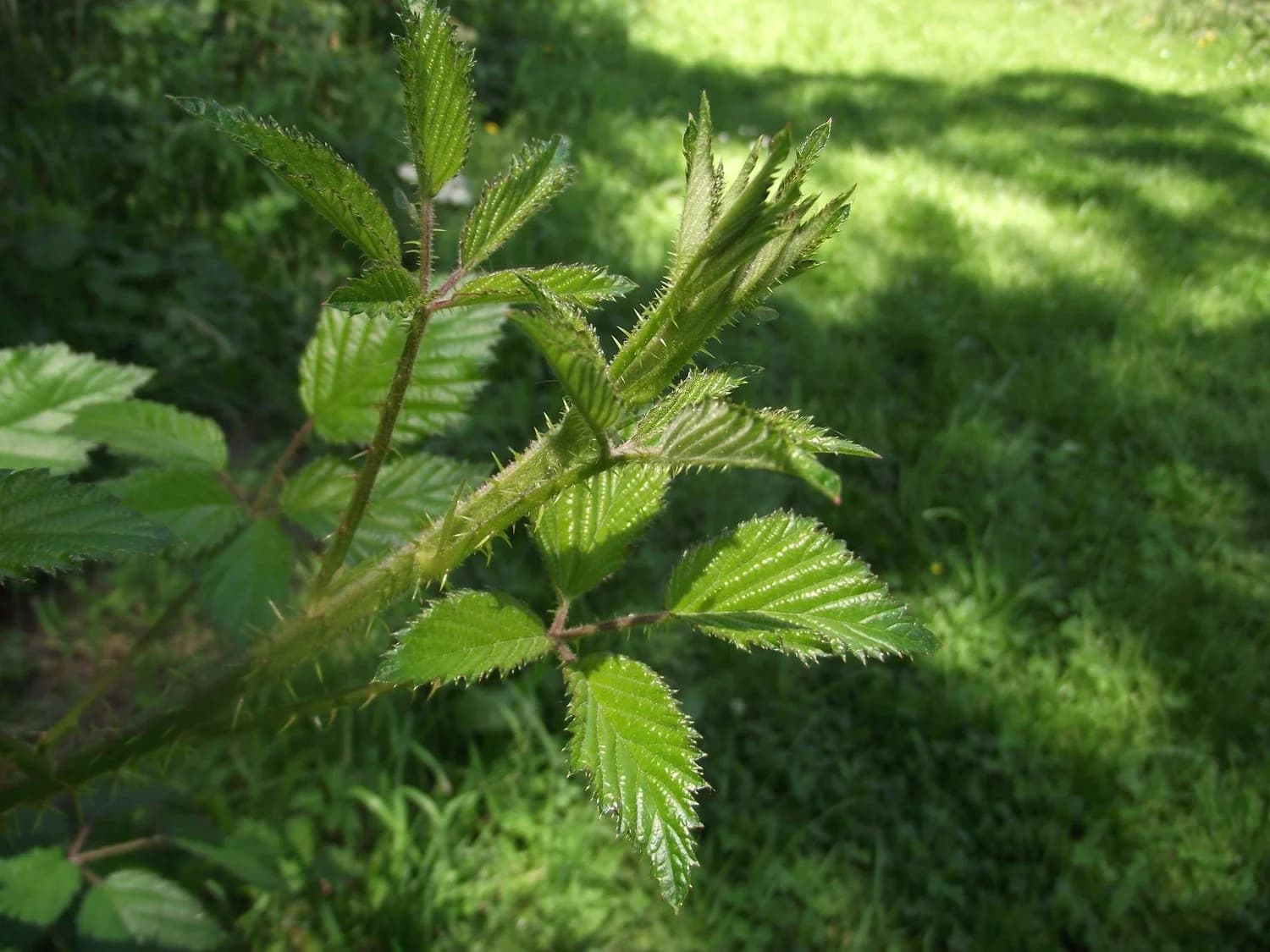
SHE Pre-Qual, Tōtika & IMPAC Certified




How to identify blackberry
Rubus fruticosus
- Sprawling thorny canes forming dense low thickets, usually chest height but climbing higher through anything it can lean on.
- Leaves in groups of three or five with toothed edges and prickles on the underside of the midrib.
- White to pale pink flowers in summer, then the familiar fruit.
- Canes arch over and root where the tip touches the ground, which is how a patch creeps outward year on year.
Why it is a problem on your land
Blackberry is the reason a lot of gullies, creek margins and fence lines simply stop being usable. Stock will not push into it, you cannot maintain a fence you cannot reach, and it provides excellent cover for rabbits and possums. Because it layers itself outward from the tips, a patch that looks stable is usually expanding a little every season.
Why spraying alone does not solve it
Herbicide can knock blackberry back, but a sprayed thicket is still a thicket of dead thorny canes, and the crown and root system are well set up to push again. The bigger practical problem is access: to spray it properly you have to be able to reach it, and the patches that matter are usually the ones in the gully or on the bank where getting to them safely is the whole difficulty.
GRazer do not spray. Herbicide is a legitimate tool and there are situations where it is the right call, but it is not a service we offer. What we do is remove the plant mechanically.
How we clear blackberry
We mulch the whole patch back to ground level, canes and crown material together, and leave the site as a clean mulch layer. Remote-controlled machines work the banks and gully sides at up to 55 degrees where blackberry is usually worst. Because the machine reduces everything to fine material rather than pushing it into a heap, there is nothing left to burn and nothing to cart away.
What the site looks like afterwards
Fence lines and creek margins become reachable again, often for the first time in years. Blackberry will attempt to come back from crowns and from seed, so plan on either grazing the site or a maintenance pass. The advantage after mulching is that you can actually get in to do that.
Blackberry questions we get asked
Can you clear blackberry on a steep bank?
Will it grow back?
Do you spray it afterwards?
Guides worth reading
- Mulching vs manual clearing: an honest comparisonA crew can clear anything, eventually. The question is what it costs, who gets hurt, and what you are left with.
- The best land clearing method for lifestyle blocksEvery block has the bit that got away. Usually a bank, a gully, or a boundary. Here is how to get it back in a day.
Other weeds we clear
Most sites have more than one. If you are looking at a mix, that is normal and it does not change the job much.
- GorseThe big one. Dense, spiny, seeds for decades, and it takes hold on exactly the slopes a tractor cannot work.
- Woolly nightshadeFast, tall, toxic to handle, and a declared pest plant across most of the North Island. Second only to gorse for search interest.
- Wilding pinesA national problem at landscape scale. Catch them small and it is a mulching job; leave them and it becomes a forestry operation.
- BambooDense, woody and famously hard to get rid of. This is where material capacity actually decides whether the job is possible.
- Pampas grassHuge clumps, prolific windborne seed, and a serious fire load. Common on banks, roadsides and coastal margins.
- KikuyuNot scrub, but it gets away from people just as badly. Rank kikuyu on a bank defeats most mowers.
Dealing with blackberry?
Send us the address and a few photos and we will come back with an estimate. No site visit needed for most jobs.