Cost guide
What gorse removal costs, and the question to ask before you book
Age of the stand is the biggest single driver, and the one you can still do something about.
The honest answer
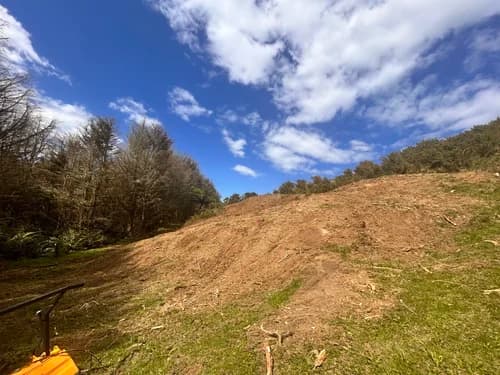
Gorse cost is driven mostly by how long it has been left. A three-year stand is quick work; a fifteen-year stand with 250mm stems on a steep face is not. The second question worth asking before you book anything is what happens next, because the seed bank in your soil is unaffected by any clearing method and some regrowth is certain. GRazer estimate most jobs from Google Maps, photos and the property address, which means you can get an initial number without anyone driving out. For larger, more complex or high-value projects they may recommend a site visit to confirm scope before work starts.
What actually drives the number
Age and size of the stand
This dominates. Young gorse is soft and fast. Mature gorse has woody stems. GRazer handle 200mm to 300mm material, which covers most established stands, but thicker and denser means slower.
Slope
Gorse colonises exactly the faces that are hard to work, which is why it was left. Workable to 55 degrees, but steeper is slower.
Access to the face
Getting the machine to the bottom or top of the face is often the deciding factor on a hill block. Photos of the access route are as useful as photos of the gorse.
Whether it is one block or scattered
A single contiguous face is more efficient than the same total area spread across five patches with travel between them.
Follow-up expectations
The first clearing is the expensive one. Most people find the maintenance pass is a fraction of it, and grazing the regrowth is cheaper again. Worth planning for rather than being surprised by.
How to keep the cost down
- Do not leave it another season, gorse gets more expensive every year, reliably
- Clear a whole face at once rather than nibbling at the edges
- Plan to graze the regrowth, which is the cheapest maintenance available
- Send photos showing stem thickness, not just the top of the canopy
- Include the access route in your photos
What is included that is easy to miss
- Whole plant processed to a mulch layer, stems included
- No burning and no chemicals
- Nothing carted off site
- Work on faces to 55 degrees with nobody standing on the slope
Cost questions we get asked
Is it cheaper to spray it first?
How much will the follow-up cost?
Other cost guides
- Land Clearing Cost in NZThe honest version: area matters less than people think, and access matters more.
- Forestry Mulching CostMaterial size is the constraint that decides whether it is a mulching job at all.
- Slope Mowing CostThe cheapest slope mowing is the kind that happens regularly. Rescue jobs cost more.
- Section Clearing CostThe big saving is not the clearing rate. It is not paying to truck the material away.

Want a number for your place?
Send the property address and a few photos, including the access. Most estimates come back without a site visit.