
Pest plant control
Broom Removal and Mulching
Gorse's close relative without the spines. Same long-lived seed bank, same habit of taking over steep and stony ground.
Get an Estimate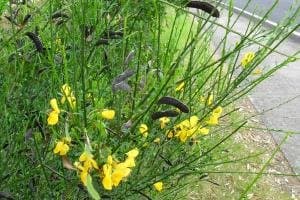
SHE Pre-Qual, Tōtika & IMPAC Certified




How to identify broom
Cytisus scoparius
- Upright green shrub, typically 1m to 3m, with slender ridged stems that stay green year round.
- Yellow pea-shaped flowers, similar to gorse, but no spines anywhere on the plant. If it does not prickle, it is broom.
- Small leaves in threes on young growth, dropping so the plant looks almost leafless.
- Seed pods turn black and split audibly in hot weather, firing seed several metres.
Why it is a problem on your land
Broom does to steep and stony country what gorse does to hill faces. It shades out pasture and regeneration, takes over riverbed margins and retired land, and builds a seed bank that stays viable in the soil for decades. Because it lacks the spines, people tend to leave it longer than gorse, and it is well established by the time it becomes an obvious problem.
Why spraying alone does not solve it
As with gorse, spraying leaves the structure standing. Dead broom is dry, brittle, still occupies the ground, and still has to break down. The seed bank is unaffected either way. On riverbeds and steep faces the access problem is the same one that stopped the site being managed in the first place.
GRazer do not spray. Herbicide is a legitimate tool and there are situations where it is the right call, but it is not a service we offer. What we do is remove the plant mechanically.
How we clear broom
We mulch broom to ground level and process the whole plant into a mulch layer on site. Remote-controlled machines work up to 55 degrees and get onto the faces and margins where broom concentrates. Stems are well inside our 200mm to 300mm capacity.
What the site looks like afterwards
The site is open and usable immediately. Seedlings will come from the existing seed bank, so treat broom the way you would treat gorse: expect a follow-up, and know that it is a fraction of the first job. Grazing after clearing is very effective on broom regrowth.
Broom questions we get asked
How is broom different from gorse to deal with?
Can you work a riverbed margin?
Other weeds we clear
Most sites have more than one. If you are looking at a mix, that is normal and it does not change the job much.
- GorseThe big one. Dense, spiny, seeds for decades, and it takes hold on exactly the slopes a tractor cannot work.
- Woolly nightshadeFast, tall, toxic to handle, and a declared pest plant across most of the North Island. Second only to gorse for search interest.
- Wilding pinesA national problem at landscape scale. Catch them small and it is a mulching job; leave them and it becomes a forestry operation.
- BlackberryLow, dense, thorny and endlessly persistent. The classic gully and fence-line invader.
- BambooDense, woody and famously hard to get rid of. This is where material capacity actually decides whether the job is possible.
- Pampas grassHuge clumps, prolific windborne seed, and a serious fire load. Common on banks, roadsides and coastal margins.
Dealing with broom?
Send us the address and a few photos and we will come back with an estimate. No site visit needed for most jobs.