
Pest plant control
Privet Removal and Clearing
A shelterbelt escapee that becomes a gully full of woody stems, and a genuine health complaint for the neighbours.
Get an Estimate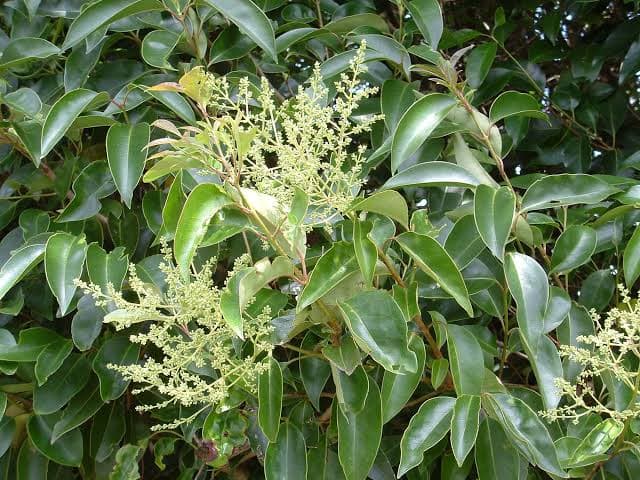
SHE Pre-Qual, Tōtika & IMPAC Certified




How to identify privet
Ligustrum sinense / lucidum
- Shrub or small tree, tree privet reaching 10m or more, Chinese privet usually smaller and bushier.
- Glossy dark green oval leaves in opposite pairs along the stem.
- Heavy clusters of small white flowers in early summer with a strong sweet smell, then dark purple-black berries.
- Frequently started as a hedge or shelter planting, then spread by birds into gullies and bush margins.
Why it is a problem on your land
Privet is the pest plant that generates complaints, because the flowering is a well-known trigger for hay fever and asthma and the smell carries. In several regions that makes it notifiable, meaning a neighbour can formally require its removal. Beyond the health angle it shades out regeneration in gullies and bush margins, and birds keep moving the seed into new country. Established tree privet develops a serious woody trunk.
Why spraying alone does not solve it
A dead privet still flowers nothing but still stands, still shades the gully, and still has to come down eventually. Where the driver is a neighbour complaint about flowering, killing it standing solves the immediate trigger but leaves the physical problem entirely in place. And the trunk size on established tree privet means somebody eventually has to deal with real timber.
GRazer do not spray. Herbicide is a legitimate tool and there are situations where it is the right call, but it is not a service we offer. What we do is remove the plant mechanically.
How we clear privet
We mulch privet in place, trunk included, and process it to a mulch layer on site. The 200mm to 300mm capacity matters on tree privet specifically, because a mature stand is well past what light slope equipment can take. Remote operation gets us into the gullies and margins where it establishes.
What the site looks like afterwards
The stand is gone and the gully is open. Birds will keep reintroducing seed from any untreated source nearby, so periodic checking is worthwhile, but the cleared site is easy to keep on top of compared with an established stand.
Privet questions we get asked
Is privet really notifiable?
Can you handle a mature tree privet trunk?
Other weeds we clear
Most sites have more than one. If you are looking at a mix, that is normal and it does not change the job much.
- GorseThe big one. Dense, spiny, seeds for decades, and it takes hold on exactly the slopes a tractor cannot work.
- Woolly nightshadeFast, tall, toxic to handle, and a declared pest plant across most of the North Island. Second only to gorse for search interest.
- Wilding pinesA national problem at landscape scale. Catch them small and it is a mulching job; leave them and it becomes a forestry operation.
- BlackberryLow, dense, thorny and endlessly persistent. The classic gully and fence-line invader.
- BambooDense, woody and famously hard to get rid of. This is where material capacity actually decides whether the job is possible.
- Pampas grassHuge clumps, prolific windborne seed, and a serious fire load. Common on banks, roadsides and coastal margins.

Dealing with privet?
Send us the address and a few photos and we will come back with an estimate. No site visit needed for most jobs.