Pest plant control
Old Man's Beard Removal
A smothering climber that collapses whole bush margins under its own weight. One of the most damaging weeds in New Zealand.
Get an Estimate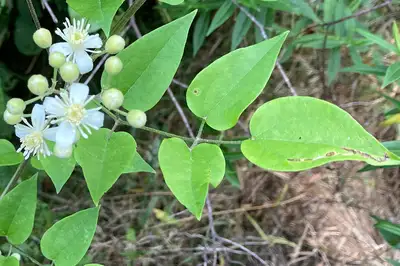
SHE Pre-Qual, Tōtika & IMPAC Certified




How to identify old man's beard
Clematis vitalba
- Vigorous woody climber with ribbed stems that thicken into ropes as they age.
- Leaves in groups of five leaflets with toothed edges, on twining stalks.
- Masses of creamy-white flowers, then the fluffy grey-white seed heads that give it its name and stay on through winter.
- Blankets everything it climbs, so a whole tree or margin can end up as one continuous curtain of vine.
Why it is a problem on your land
Old man's beard does not just compete, it smothers. It climbs into canopy, blocks the light entirely, and the accumulated weight of vine physically collapses trees and margins. Left alone it converts a functioning bush edge into a mound of vine. The seed is wind-blown and travels widely, and it is a declared pest plant in most regions for good reason.
Why spraying alone does not solve it
The vine mass is the problem. Killing it still leaves tonnes of dead vine draped through the canopy, still weighing down and shading whatever is underneath, and it stays there for years. On a collapsed margin the practical job is removing material, not killing tissue.
GRazer do not spray. Herbicide is a legitimate tool and there are situations where it is the right call, but it is not a service we offer. What we do is remove the plant mechanically.
How we clear old man's beard
We clear the vine mass and the scrub it has taken over mechanically, mulching it into the ground layer on site. Remote-controlled machines work the gully sides and margins at up to 55 degrees where this species does most of its damage. Where there is native regeneration worth protecting we work around it rather than through it.
What the site looks like afterwards
The margin is open and light gets to the ground again, and on restoration sites the cleared ground is generally ready for planting. Seed keeps arriving on the wind, so old man's beard sites reward being checked periodically rather than cleared once and forgotten.
Old man's beard questions we get asked
Can you clear it without damaging native regeneration?
What happens to all the vine material?
Other weeds we clear
Most sites have more than one. If you are looking at a mix, that is normal and it does not change the job much.
- GorseThe big one. Dense, spiny, seeds for decades, and it takes hold on exactly the slopes a tractor cannot work.
- Woolly nightshadeFast, tall, toxic to handle, and a declared pest plant across most of the North Island. Second only to gorse for search interest.
- Wilding pinesA national problem at landscape scale. Catch them small and it is a mulching job; leave them and it becomes a forestry operation.
- BlackberryLow, dense, thorny and endlessly persistent. The classic gully and fence-line invader.
- BambooDense, woody and famously hard to get rid of. This is where material capacity actually decides whether the job is possible.
- Pampas grassHuge clumps, prolific windborne seed, and a serious fire load. Common on banks, roadsides and coastal margins.
Dealing with old man's beard?
Send us the address and a few photos and we will come back with an estimate. No site visit needed for most jobs.