A certified land clearing contractor in New Zealand holds third-party prequalification such as SHE Pre-Qual, Tōtika or IMPAC, which audits their health and safety systems, insurance and competence before a council, utility or civil principal lets them on site. For a private landowner, the same certification is the simplest available evidence that the contractor has documented systems, current insurance and trained operators, rather than just a machine and a good story.
What prequalification is
Prequalification schemes exist because principals, the councils, utilities and civil contractors who engage subcontractors, are responsible under the Health and Safety at Work Act for the people working on their sites. Rather than each principal auditing each contractor from scratch, the schemes do it once and the principal checks the result.
SHE Pre-Qual and IMPAC are contractor prequalification schemes that assess a contractor's health and safety systems, insurance, training records and incident history before letting them on site. Tōtika is the shared prequalification standard used across a large part of the New Zealand construction and infrastructure sector, designed so a contractor is assessed once rather than separately by every client. Between them the three cover most principal requirements in this sector.
Why it matters even if you are not a council
If you are a farm, a lifestyle block or a private landowner, nobody requires your contractor to be prequalified. It is still the quickest way to know what you are dealing with. A prequalified contractor has had their insurance certificates checked, their health and safety systems documented and audited, their operator competence recorded, and has a process for assessing site risk before work starts.
The alternative is taking their word for it. On a job that involves a heavy machine working a steep face above your fence line, your water take or your neighbour's driveway, that is a real gap.
What to ask for, and what a straight answer looks like
Ask which prequalification they hold and whether it is current. The honest answer names the scheme. Ask for evidence of public liability insurance and, for anything involving your buildings or infrastructure, what the cover is. Ask how they assess a site before starting: a good contractor will talk about gradient, ground moisture, hidden hazards, access, overhead lines and what is under the vegetation, without being prompted.
Ask about biosecurity. Pest plants travel on machinery, and a contractor who moves between properties without cleaning down is spreading the problem they are being paid to fix. The right answer is that machines are cleaned between sites and the cleaning is recorded.
Ask who is on the machine and where they stand. For steep work the answer should be that the machine is remote-controlled and the operator is on stable ground, not that they have a good operator who is comfortable on a slope.
Certified does not mean capable of your job
Prequalification tells you a contractor is safe to have on site. It does not tell you their machine can do the work. The two questions to add are slope rating and material capacity. A machine rated to 55 degrees, in degrees rather than per cent, covers the faces where gorse and wildings do their best work. Material capacity in the 200mm to 300mm range means mature gorse, established privet and bamboo are one operation rather than a felling job first.
A contractor who is vague on either number, or who quotes a slope figure without the unit, is worth pressing. The two get confused constantly and the difference is nearly double.
Where GRazer sits
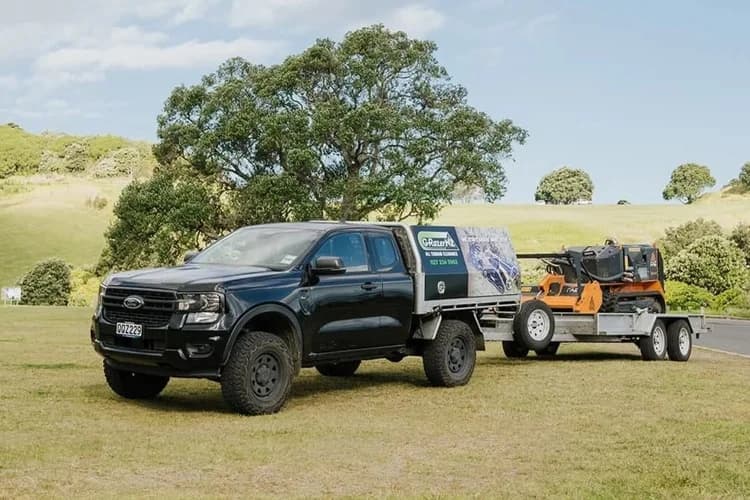
GRazer hold SHE Pre-Qual, Tōtika and IMPAC, which is generally what a council or civil principal requires before we are on site. We carry the appropriate insurance, work to documented health and safety systems, and record biosecurity cleaning between every site. The machines are remote-controlled, rated to slopes up to 55 degrees, and handle material to 200mm to 300mm. All of that is available in writing before a job starts, which is how it should be.
The short version
- SHE Pre-Qual, Tōtika and IMPAC audit a contractor's safety systems, insurance and competence before principals let them on site.
- For a private landowner, certification is the simplest evidence the contractor is what they say.
- Ask for the scheme by name, insurance evidence, the site assessment process and biosecurity cleaning.
- Certified is not the same as capable. Add slope rating and material capacity to the questions.
- Any slope figure without a unit is worth pressing. Degrees and per cent are nearly double apart.
Got a site like this?
Call Dan on 027 234 5962, or send the address and a few photos and we will come back to you with an estimate.